Last Updated on 2025-09-07 by Topmenz Shoes
Sports shoes are more than just footwear—they’re engineered tools designed to enhance performance, prevent injuries, and adapt to the unique demands of your sport. Whether you’re a marathon runner, a basketball player, or a weekend warrior, selecting the right pair of sports shoes can make or break your experience. As a professional sports shoe manufacturer, we combine biomechanics, material science, and athlete insights to craft footwear that meets the highest standards. This comprehensive 3,000+ word guide will walk you through every factor to consider when choosing sports shoes, ensuring you find the perfect match for your needs.

1. Understanding Your Needs: The Foundation of Choosing Sports Shoes
Before diving into features, identify your primary use case:
1.1 Sport-Specific Requirements
- Running Shoes: Built for forward motion with cushioning and heel-to-toe drop.
- Basketball Shoes: High-tops for ankle support and responsive cushioning for jumps.
- Tennis Shoes: Lateral support for side-to-side movements and durable outsoles.
- Soccer Cleats: Lightweight uppers and stud configurations for turf or grass.
- Cross-Training Shoes: Versatile designs for gym workouts, HIIT, and weightlifting.
1.2 Foot Type and Gait Analysis
- Neutral Arch: Balanced cushioning (e.g., Nike Air Zoom Pegasus).
- Flat Feet (Overpronation): Motion control shoes (e.g., Brooks Adrenaline GTS).
- High Arches (Supination): Cushioned midsoles (e.g., Hoka Bondi).
- Gait Testing: Visit a specialty store for treadmill analysis to identify pronation patterns.
1.3 Terrain and Environment
- Road Running: Lightweight, breathable sports shoes with flexible soles.
- Trail Running: Rugged outsoles (e.g., Vibram Megagrip) and rock plates.
- Indoor Sports: Non-marking rubber soles for court surfaces.
2. Key Features to Look for in Sports Shoes
Sports shoes are defined by their components. Here’s what matters most:
2.1 Upper Materials: Balancing Breathability and Support
- Mesh: Lightweight and breathable (e.g., Adidas Primeknit).
- Synthetic Leather: Durable for basketball or tennis.
- Knit Uppers: Adaptive fit for running (e.g., Nike Flyknit).
- Waterproofing: Gore-Tex membranes for wet conditions.
2.2 Midsole Technology: Cushioning and Energy Return
- EVA Foam: Affordable and lightweight but compresses over time.
- Polyurethane (PU): Denser and longer-lasting for heavy loads.
- PEBAX Foam: High energy return (e.g., Nike ZoomX).
- Air/Gel Units: Nike Air, ASICS Gel, or Reebok Hexalite for targeted cushioning.
2.3 Outsole Design: Traction and Durability
- Rubber Compounds:
- Carbon Rubber: Durable for road running (e.g., New Balance FuelCell).
- Sticky Rubber: Enhanced grip for trail sports (e.g., Salomon Contagrip).
- Tread Patterns:
- Herringbone: Multi-directional grip for tennis.
- Lug Depth: 4–6mm lugs for muddy trails.
2.4 Support Systems: Stability and Injury Prevention
- Arch Support: Medial posts for overpronation (e.g., ASICS Kayano).
- Heel Counters: Rigid heel cups to stabilize the foot.
- Torsion Bars: Midfoot shanks (e.g., Adidas Torsion System) for lateral support.
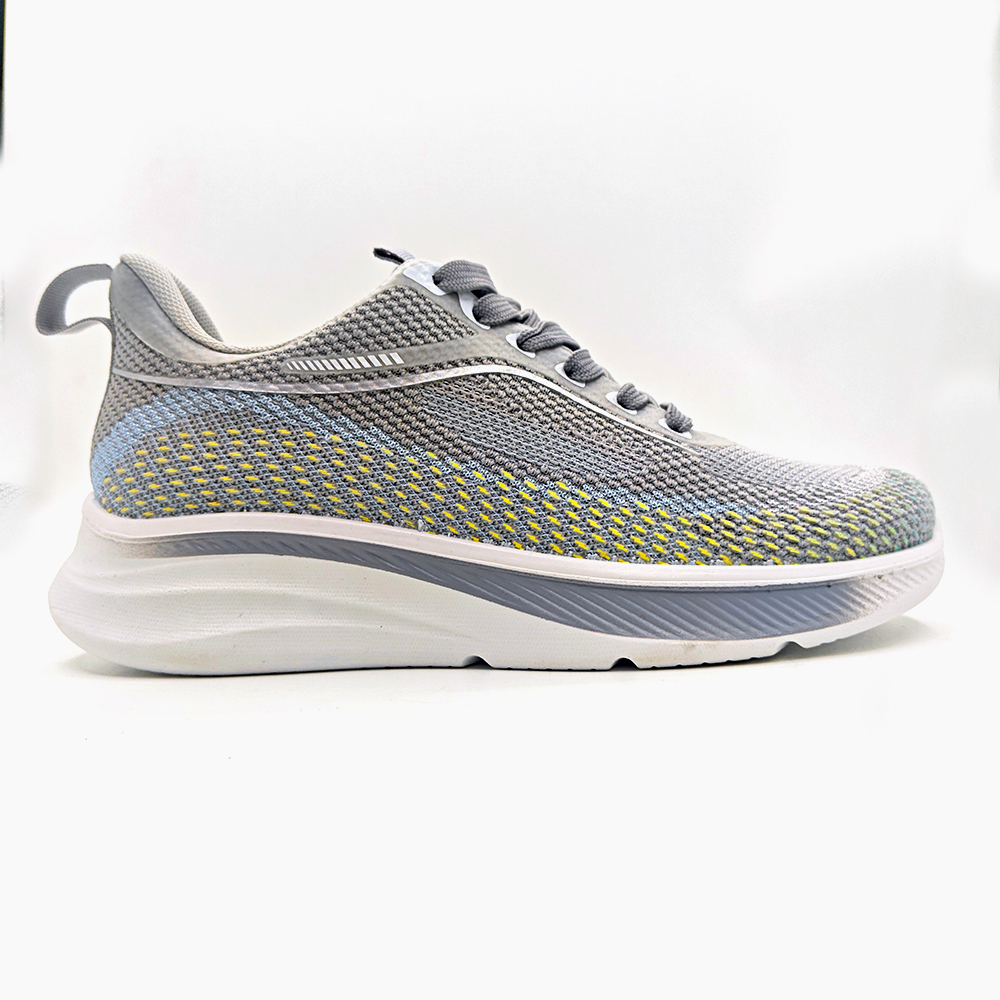

3. Sport-Specific Breakdown: Choosing Sports Shoes for Your Activity
3.1 Running Shoes
- Cushioning Levels:
- Maximalist: Hoka Bondi (thick midsoles for long distances).
- Minimalist: Vibram FiveFingers (barefoot feel).
- Heel-to-Toe Drop:
- 0–4mm: Natural stride (e.g., Altra Escalante).
- 8–12mm: Traditional cushioning (e.g., Brooks Ghost).
3.2 Basketball Shoes
- Ankle Support: High-tops (e.g., Air Jordan 36) vs. low-tops (e.g., Curry Flow 10).
- Responsive Cushioning: Zoom Air units (Nike) or Lightstrike Pro (Adidas).
- Traction: Translucent rubber outsoles for indoor courts.
3.3 Soccer Cleats
- Stud Types:
- FG (Firm Ground): Conical studs for natural grass.
- SG (Soft Ground): Metal studs for wet fields.
- Upper Touch: Textured surfaces (e.g., Adidas Predator) for ball control.
3.4 Tennis Shoes
- Durability: Toe guards and abrasion-resistant outsoles (e.g., ASICS Gel-Resolution).
- Lateral Support: Wide bases and reinforced midsoles.
4. The Fit Factor: Ensuring Your Sports Shoes Feel Right
Even the best technology won’t matter if the shoes don’t fit.
4.1 Sizing Tips
- Toe Room: 1–1.5 cm (thumb’s width) between toes and shoe tip.
- Width Options: Brands like New Balance offer 2E (wide) and 4E (extra-wide).
- Sock Consideration: Wear performance socks during fitting.
4.2 Break-In Period
- Running Shoes: 20–30 miles of gradual use.
- Basketball Shoes: Short drills before full games.
4.3 Common Fit Issues
- Heel Slippage: Use heel-lock lacing techniques.
- Hotspots: Look for seamless interiors or stretchable uppers.
5. Material Innovations in Sports Shoes
Advancements in materials are redefining comfort and sustainability.
5.1 Sustainable Fabrics
- Recycled Polyester: Adidas Parley shoes made from ocean plastic.
- Algae-Based Foam: Allbirds Dasher reduces carbon footprint.
5.2 Advanced Cushioning
- Nike React Foam: 13% more energy return than traditional EVA.
- adidas Boost: TPU pellets retain properties in extreme temperatures.
5.3 Smart Textiles
- Temperature Regulation: Phase-change materials (PCM) in UA Rush shoes.
- Moisture-Wicking: Merino wool blends for odor control.
6. Durability and Longevity: Getting the Most from Your Sports Shoes
Sports shoes are an investment. Here’s how to extend their lifespan:
6.1 Mileage Limits
- Running Shoes: Replace every 300–500 miles.
- Basketball Shoes: 6–12 months of regular play.
6.2 Wear Patterns
- Outsole Wear: Smooth treads or bald spots signal replacement.
- Midsole Compression: Loss of bounce or visible creasing.
6.3 Cleaning and Maintenance
- Mesh Uppers: Clean with mild soap and air dry.
- Leather Uppers: Condition with specialized products.
- Odor Control: Use antibacterial sprays or cedar shoe trees.

7. Budget vs. Performance: Finding the Sweet Spot
Sports shoes range from 50to50to300+. Here’s how to prioritize:
7.1 Entry-Level (50–50–100)
- Best For: Casual use or low-impact activities.
- Examples: Nike Revolution, Adidas Duramo.
7.2 Mid-Range (100–100–200)
- Best For: Regular runners or gym enthusiasts.
- Examples: Brooks Ghost, ASICS GT-2000.
7.3 Premium ($200+)
- Best For: Elite athletes or technical sports.
- Examples: Nike Alphafly NEXT%, Adidas Prime X Strung.
8. Brand Comparisons: Strengths of Leading Sports Shoes
While we pride ourselves on craftsmanship, here’s an unbiased overview:
| Brand | Strengths | Flagship Model |
|---|---|---|
| Nike | Responsive cushioning, innovation | Air Zoom Alphafly NEXT% |
| Adidas | Energy return, sustainability | Ultraboost Light |
| ASICS | Stability, durability | Gel-Kayano 30 |
| New Balance | Wide fits, retro styles | Fresh Foam X 1080v13 |
| Hoka | Maximalist cushioning | Bondi 8 |
9. The Future of Sports Shoes: Emerging Trends
9.1 AI-Driven Customization
- 3D Foot Scanning: Tailored midsoles and uppers (e.g., Under Armour Flow).
- App-Controlled Fit: Adjustable lacing via smartphone.
9.2 Eco-Friendly Manufacturing
- Circular Design: Recyclable sports shoes (e.g., adidas Futurecraft Loop).
- Plant-Based Leather: Mushroom or cactus leather uppers.
9.3 Wearable Tech Integration
- Pressure Sensors: Track gait and weight distribution in real-time.
- Smart Insoles: Monitor performance metrics like cadence and impact force.
10. Final Checklist: Choosing Your Ideal Sports Shoes
Before purchasing, ask these questions:
- What sport or activity will I use them for?
- What’s my foot type (neutral, flat, high arches)?
- Do I need stability, cushioning, or lightweight design?
- What’s my budget?
- Have I tested the fit with my performance socks?
Choosing the right sports shoes
Choosing the right sports shoes is a blend of science and personal preference. By understanding your biomechanics, prioritizing sport-specific features, and staying informed about material innovations, you can unlock peak performance and comfort. As manufacturers committed to excellence, we’re here to ensure every step you take is supported by cutting-edge technology and timeless craftsmanship.
Any questions pls contact custom shoes expert Whatsapp +86 13392749315 and Get the latest news and updates straight to your email inbox.