Last Updated on 2026-08-26 by Tina
When buying leather shoes, many people look at the color and design first.
But for a good pair of shoes, the leather matters just as much.
The leather affects the shoe’s look, feel, durability, comfort, and price. It also affects how the shoe ages after months or years of use.
For buyers, retailers, and footwear brands, knowing the difference between leather types can help avoid the wrong purchase.
But there is one common problem.
The leather industry uses many different terms. Full grain, top grain, corrected grain, split leather, suede, nubuck, aniline and semi-aniline can sound confusing.
So what do they really mean?
So today, TOPMENZ will give you a brief talk.
Leather Grades Are Not Simply “Good, Better, Best”
One common mistake is to think leather has one universal ranking system.
It does not.
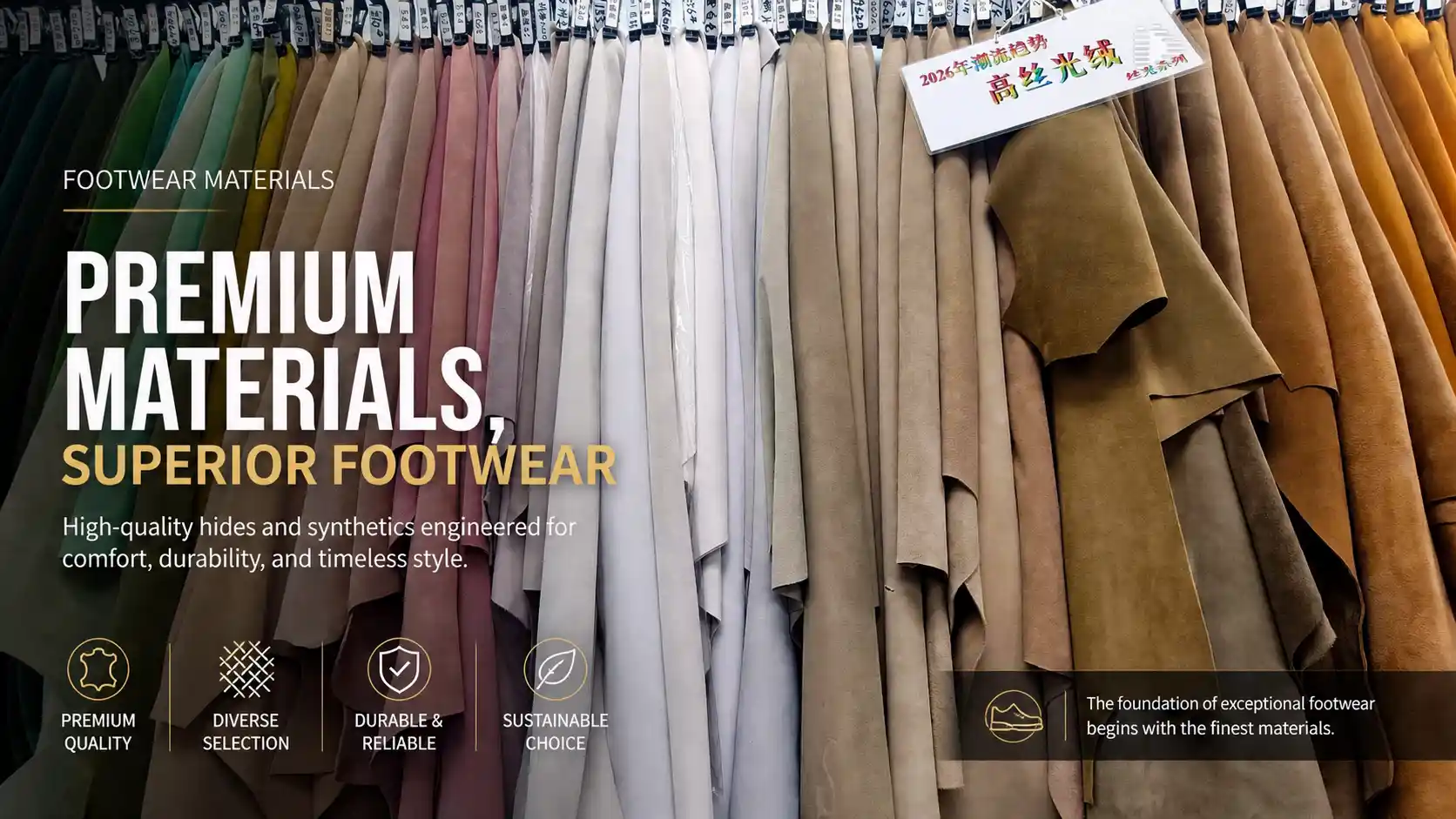
Terms such as full grain, corrected grain, and split leather mainly describe which part of the hide is used and how the surface has been processed.
Other terms, such as aniline, semi-aniline, and pigmented leather, describe the type of finishing used on the leather surface.
This difference is important when buying leather for men’s shoes.
A buyer should not choose leather only because one label sounds more expensive.
The right question is:
Does this leather match the shoe, customer, price point, and use?
Full Grain Leather
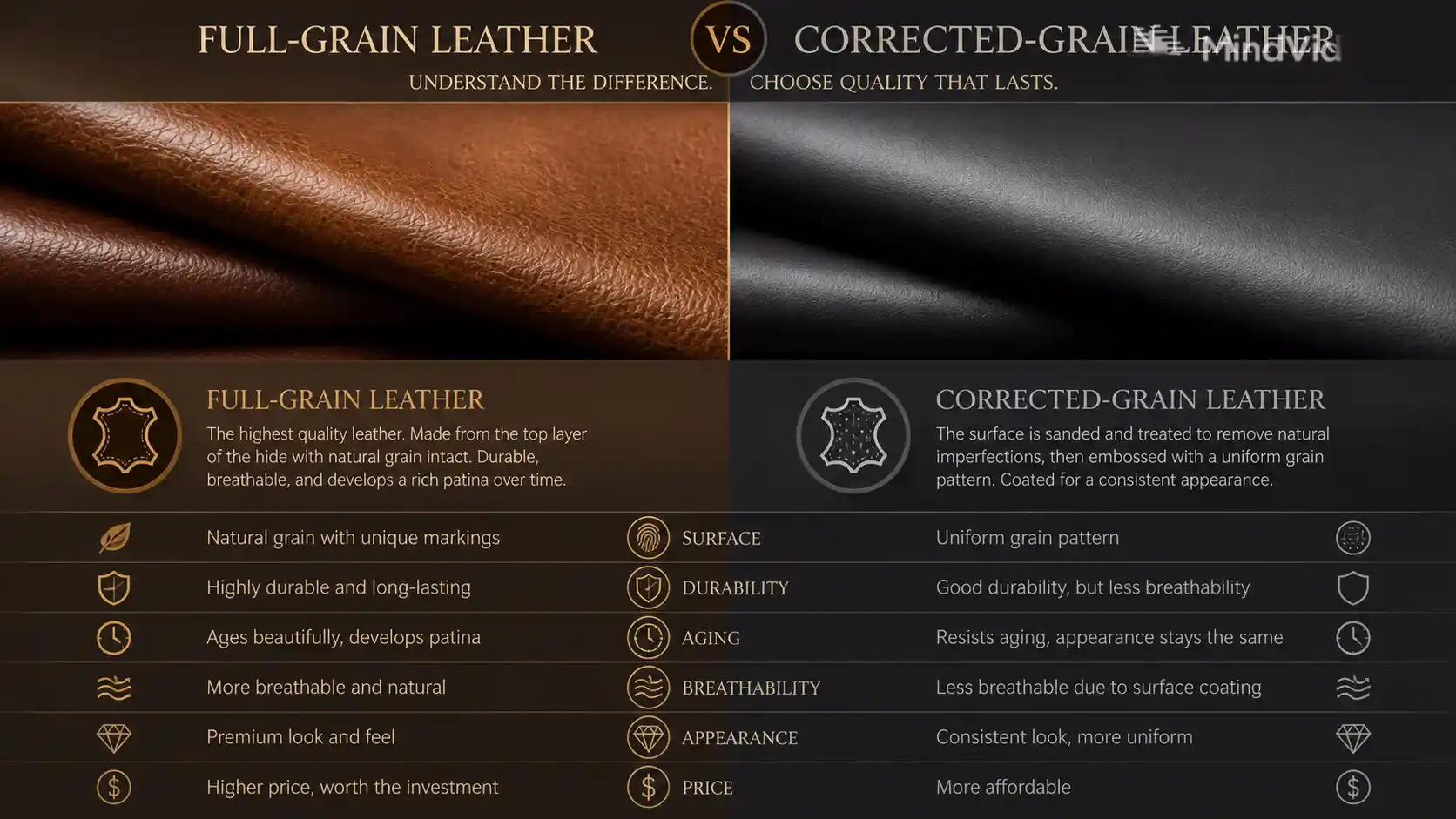
Full grain leather keeps the natural grain surface of the hide.
According to Leather Working Group terminology, full grain leather has kept its entire grain, without the surface being removed through corrective mechanical treatment.
This is one reason full grain leather is highly valued in premium footwear.
The natural surface can show:
- Natural grain
- Small marks
- Fine texture
- Natural color variation
These are not always defects.
They can be signs that the surface has not been heavily corrected.
Why brands like Full Grain Leather
For full grain leather shoes, the main selling points are:
- Premium appearance
- Strong natural structure
- Good durability
- Natural aging
- High-end feel
This makes it a strong choice for premium men’s leather shoes, business shoes, and high-end Derby or Oxford shoes.
However, full grain leather is not automatically the best choice for every product.
A casual shoe may need a softer leather.
A daily work shoe may need more surface protection.
A luxury shoe may need a very clean appearance.
The product comes first.
Top Grain Leather
Top grain leather is another common term in the footwear industry.
It generally refers to leather taken from the grain side of the hide. It may still be lightly corrected or finished.
This is where buyers need to be careful.
“Top grain” does not always mean the same exact surface condition from one supplier to another.
Some top grain leather may have a natural appearance.
Other top grain leather may have been lightly buffed or finished.
For this reason, when sourcing top grain leather shoes, ask the supplier:
Has the grain surface been buffed?
What type of finish is used?
These questions are more useful than simply asking whether the leather is “top grain.”
Corrected Grain Leather
Corrected grain leather has been mechanically treated to reduce or change some of the natural surface characteristics.
TOPMENZ defines corrected grain as leather where the grain has been partially removed by buffing or a similar mechanical treatment and then enhanced with a finish.
Why would a manufacturer do this?
Because natural hides are not perfectly uniform.
They can have:
- Insect marks
- Scars
- Wrinkles
- Natural variations
Surface correction can create a more even appearance.
This can be useful for shoes that need a clean and consistent look.
So corrected grain should not simply be called “bad leather.”
It is a different material choice.
Split Leather
A hide can be split horizontally into different layers.
The upper layer is called the grain split, while the lower layer can be called the flesh split.
Leather made from the lower part is generally known as split leather.
It can be finished in different ways.
This makes split leather useful for different footwear applications where the performance and price requirements are different from premium full grain leather.
For B2B buyers, the key is not to ask:
“Is split leather good or bad?”
Instead ask:
“What is this split leather being used for, and what finish has been applied?”
Suede and Nubuck Are Not the Same
This is another area where buyers often get confused.
Both can have a soft, velvet-like surface.
But their structure is different.
Nubuck
Nubuck leather is made by buffing the grain side to create a fine velvet-like surface while the original grain pattern remains visible.
It is often used for:
- Premium casual shoes
- Loafers
- Boots
- Smart casual footwear
Suede
Suede is generally made from the lower split of the hide and has a softer nap created through mechanical finishing.
This creates the familiar soft surface that many customers associate with suede shoes.
For brands selling suede men’s shoes, understanding this difference helps when discussing materials with a manufacturer.
Aniline Leather
Aniline leather is valued for its natural appearance.
LWG defines it as leather where the natural grain remains clearly visible, with no surface coating or only a very thin non-pigmented coating.
This type of leather can show more natural variation.
That is part of its character.
It can be an excellent option for luxury footwear where the natural leather appearance is an important selling point.
But it may also require more careful handling than heavily finished leather.
Semi-Aniline Leather
Semi-aniline leather has a small amount of pigment in its finish while keeping the natural grain visible.
It offers a useful balance.
You can still see some natural leather character, while the finish provides more control over color and appearance.
For premium business leather shoes, this can be a practical choice.
How to Identify Leather Quality
Now we come to the question buyers ask most often:
How can I tell if leather is good?
Do not rely on one test.
Look at several things together.
1. Check the Surface
Natural leather usually has some variation.
A perfectly uniform surface does not automatically mean poor quality, but it may indicate more surface correction or finishing.
2. Check the Grain
Look closely at the texture.
A natural grain pattern can help you understand how the surface has been treated.
3. Check the Thickness
Leather thickness should match the shoe design.
A formal shoe, work shoe, loafer, and soft casual shoe may require different leather specifications.
4. Check the Back
If possible, inspect the flesh side or edge of the leather.
This can provide more information than looking only at the finished surface.
5. Ask for the Leather Specification
For B2B buyers, this is the most important step.
Ask the supplier about:
- Leather type
- Hide origin
- Thickness
- Tannage
- Finish
- Color
- Surface treatment
A professional leather shoes supplier should be able to explain these details clearly.
Which Leather Is Best for Men's Shoes?
There is no single answer.
Different shoes need different leather.
| Leather Type | Main Character | Suitable Shoes |
|---|---|---|
| Full Grain | Natural and durable | Premium formal shoes |
| Top Grain | Clean and versatile | Business shoes |
| Corrected Grain | More uniform surface | Daily formal shoes |
| Split Leather | Flexible cost option | Casual footwear |
| Suede | Soft and textured | Loafers and casual shoes |
| Nubuck | Fine velvet surface | Premium casual shoes |
| Aniline | Natural luxury look | High-end footwear |
| Semi-Aniline | Natural look with more protection | Premium business shoes |
The best leather for shoes depends on the product position.
A €100 retail shoe does not need the same material strategy as a €500 luxury shoe.
This is where an experienced manufacturer can help.
How Leather Choice Affects Shoe Price
Leather is only one part of the final shoe cost.
Other factors include:
- Leather yield
- Hide quality
- Thickness
- Tannage
- Construction
- Sole material
- Labor
- Finishing
- Packaging
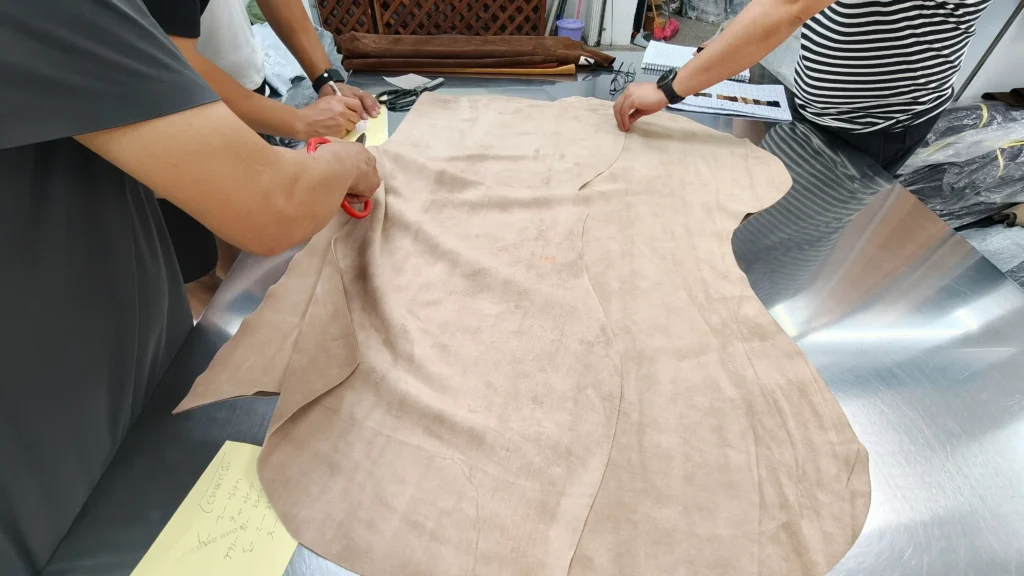
For example, natural full grain leather may contain more visible marks.
This can reduce usable cutting area compared with heavily corrected leather.
A skilled cutting team must position each shoe carefully to achieve a good balance between appearance and material use.
This is one reason premium footwear manufacturing requires more than simply buying expensive leather.

A Simple Checklist Before You Place an Order
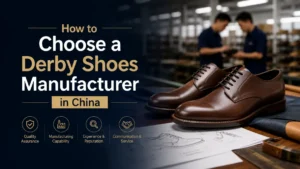
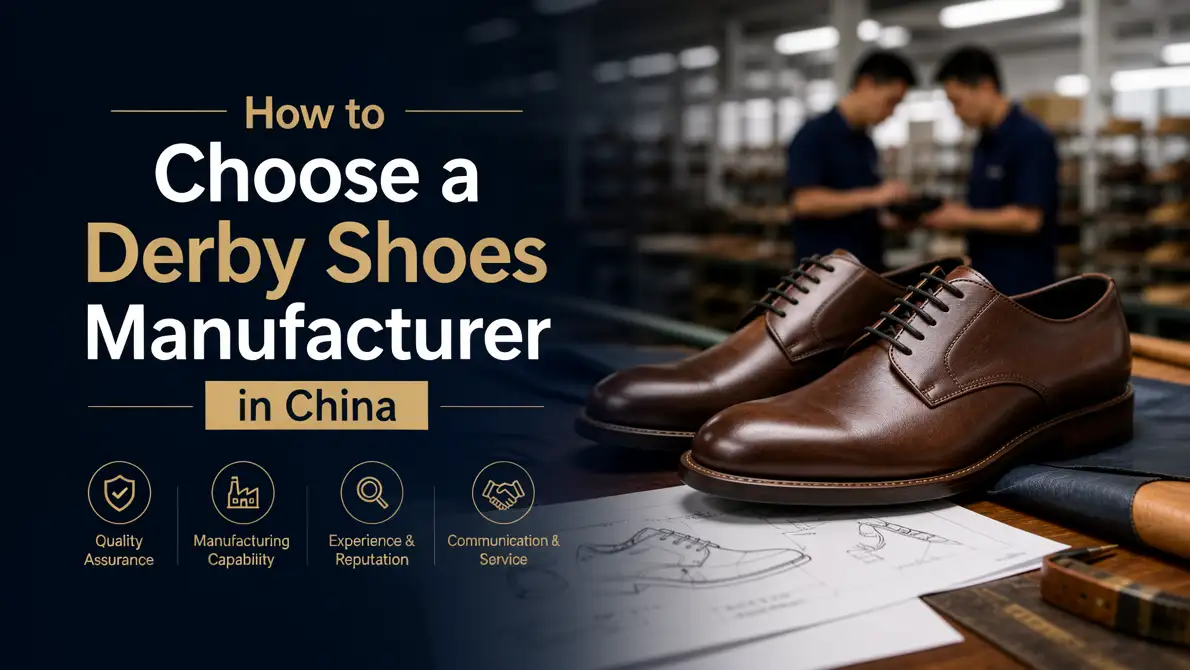
Before choosing a Derby Shoes Manufacturer, ask these questions:
- Can they make the construction I need?
- Can they provide the leather quality I want?
- Can they develop samples from my design?
- Can they keep quality stable during repeat orders?
- Can they support my target market?
- Do they understand international export?
- Can they communicate clearly in English?
- Can they provide a realistic production timeline?
If the answer is yes to most of these questions, you may have found a suitable manufacturing partner.Or you can refer to how we are solving your current shoe business!
cooperation and mutual benefits
What are the advantages of choosing TOPMEZN SHOES?
✔20 years of professional one-stop footwear solutions
✔Custom Oxford shoes development✔Custom Derby shoes production
✔Private label footwear solutions
✔Leather selection
✔Logo customization
- ✔Wholesale production
Contact Topmenz – Professional OEM/ODM Footwear Factory
WhatsApp: https://wa.me/+8613532888732
Email: tina.tan@topmenzshoes.com
Website: https://topmenzshoes.com