Last Updated on 2026-11-05 by Tina
When choosing men’s dress shoes, the difference between Derby vs Oxford shoes is one of the first things buyers should understand. Both are classic lace-up styles, but their construction, appearance and fit make them suitable for different occasions and footwear collections.
At first glance, they may look almost the same. Both are lace-up shoes, both are popular in men’s formal footwear, and both can be made from smooth leather, suede or other materials.
But there is one important difference that changes their appearance and how they open around the foot: the lacing construction.
In this guide, we will look at their construction, fit, styling, materials and manufacturing considerations to help you understand both styles.
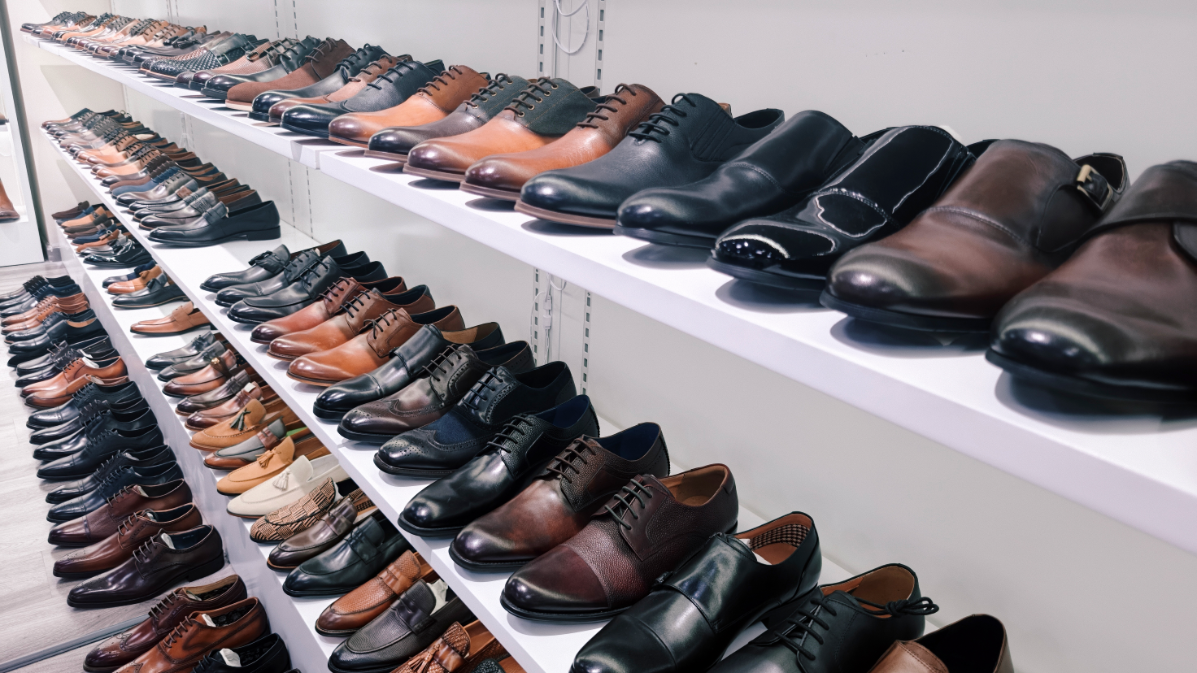
What Is the Difference Between Derby vs Oxford Shoes?
The main difference between Oxford and Derby shoes is their lacing system.
Oxford shoes have closed lacing. The eyelet panels are stitched underneath the vamp, creating a cleaner and more enclosed appearance.
Derby shoes have open lacing. The eyelet panels are stitched on top of the vamp, allowing the sides to open more freely.
This small construction detail gives each shoe a different look.
Oxfords are generally considered more formal, while Derbies offer a more relaxed appearance and greater adjustment around the instep.
Neither style is automatically better. The right choice depends on the design, fit, materials and occasion.For instance, if you prefer something more business-like and snug, choose Oxford shoes; otherwise, go for Derby shoes.
Derby vs Oxford Shoes: A Quick Comparison
| Feature | Oxford Shoes | Derby Shoes |
|---|---|---|
| Lacing system | Closed lacing | Open lacing |
| Appearance | Clean and streamlined | More open and relaxed |
| General style | Formal and classic | Formal to smart casual |
| Instep adjustment | More limited by the lacing opening | Usually more adjustable |
| Common use | Business suits, formal events | Office wear, business casual, everyday dressing |
| Common designs | Cap toe, plain toe, wholecut, brogue | Plain toe, cap toe, wingtip, brogue |
| Materials | Smooth leather, suede, patent leather | Smooth leather, suede, grain leather |
Remember that the lacing system identifies the shoe type. Other details, such as toe shape, leather finish and sole construction, can change its overall appearance.
What Are Oxford Shoes?
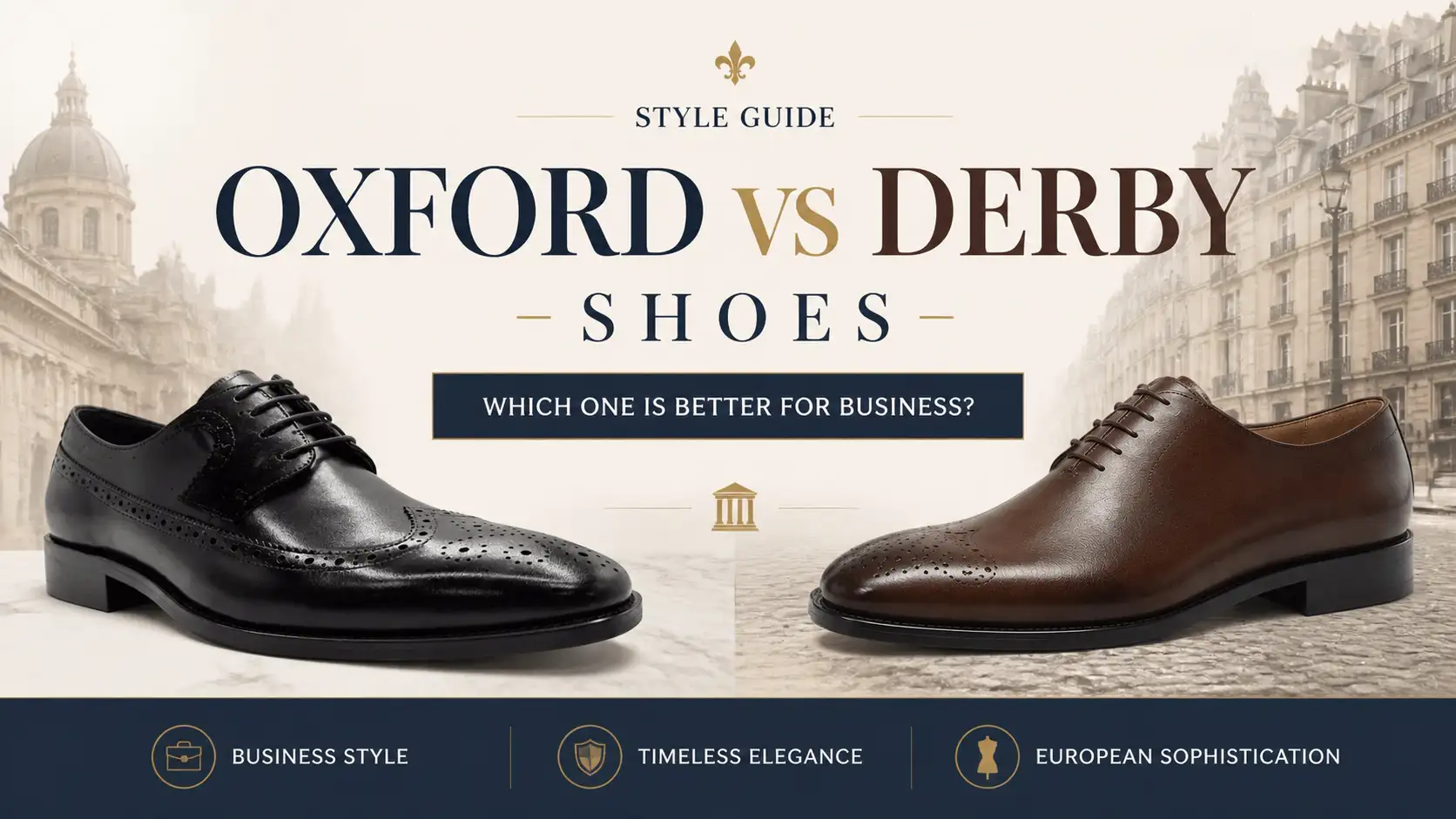
Oxford shoes are classic lace-up shoes defined by their closed-lacing construction.
The eyelet panels, also known as facings, are attached underneath the vamp. The vamp is the front section of the upper that covers the toes and instep.
When the laces are tightened, the opening stays relatively close together. This creates a neat, streamlined appearance.
The simple design is one reason Oxford shoes have remained a popular choice for formal and business footwear.
Common Types of Oxford Shoes
1. Cap Toe Oxford
A cap toe Oxford has an additional piece of leather stitched across the front of the shoe. It is a popular choice for business and formal collections.
2. Plain Toe Oxford
A plain toe Oxford has a clean front without an extra toe-cap panel. Its simple design gives it a refined appearance.
3. Wholecut Oxford
A wholecut Oxford is made from one main piece of leather for the upper, with fewer visible seams. It requires careful pattern development and leather selection.
4. Brogue Oxford
A brogue Oxford combines closed lacing with decorative perforations in the leather. It adds more visual detail while keeping the Oxford construction.
What Are Oxfords Best Known For?
Oxford shoes are commonly associated with formal dressing.
They work well with business suits, tailored trousers and formal outfits. Black smooth leather Oxfords are a traditional choice for more formal occasions, while brown and other leather finishes can offer a slightly softer look.
For footwear brands, Oxford shoes are a useful foundation for a classic men’s dress shoe collection.Men in European countries are very fond of Oxford shoes, especially those in the gentlemanly country of the United Kingdom! Therefore, we suggest that when building a private brand, the first thing to consider should be Oxford shoes.
What Are Derby Shoes?
Derby shoes are lace-up shoes with an open-lacing construction.
Unlike an Oxford, the eyelet panels are stitched on top of the vamp. This allows the sides of the shoe to open wider when the laces are loosened.
The design gives Derbies a slightly more relaxed appearance. It can also provide more adjustment around the instep, although the actual fit depends on the shoe last, upper pattern and size.
Derby shoes are not limited to casual wear. A well-designed leather Derby can look just as refined as many traditional dress shoes.
Common Types of Derby Shoes
1. Plain Toe Derby
A plain toe Derby has a simple upper without an additional toe-cap panel. It is easy to style and works across different levels of formality.
2. Cap Toe Derby
A cap toe Derby features a separate leather panel across the toe. It adds structure and detail to the shoe.
3. Brogue Derby
A brogue Derby combines open lacing with decorative perforations. It is a good option for brands looking for a more detailed casual or smart-casual design.
4. Wingtip Derby
A wingtip Derby has a W-shaped toe design that extends towards the sides of the shoe. It creates a more distinctive and traditional appearance.
What Makes Derby Shoes Different in Everyday Use?
The open-lacing design allows the shoe opening to adjust more freely.
This can be helpful for customers who need additional room around the instep. However, it does not guarantee that every Derby will fit wider feet better than every Oxford.
Last shape, shoe width, materials and construction all matter.
For brands, this is an important point when developing different fits for different customer groups.
For wholesalers, it is necessary to strictly control the overall production scale of the water flow operation, whether the quality can be guaranteed on time and in the right quantity, and whether the delivery can be smooth.
For wholesalers, it is necessary to strictly control the overall production scale of the water flow operation, whether the quality can be guaranteed on time and in the right quantity, and whether the delivery can be smooth.
Derby vs Oxford Shoes: Which Style Is More Formal?
Oxford shoes are generally considered the more formal option because their closed-lacing design creates a cleaner and more contained appearance.
They are a natural choice for:
Formal business suits
Weddings and special occasions
Traditional office environments
Dress codes that require a refined appearance
Derby shoes are more flexible in styling.
They can work with business suits, chinos, wool trousers and selected smart-casual outfits. A black leather Derby can still look very formal, while a brown suede Derby usually feels more relaxed.
The final impression depends on more than the lacing system. Leather colour, toe shape, decoration and sole design also play a role.
Can Derby Shoes Be Worn with a Suit?
Yes. Derby shoes can work very well with suits.
For a more formal look, choose a simple leather Derby in black or dark brown. A plain toe or restrained cap toe design is usually a safe choice.
For business casual outfits, brown leather or suede Derbies offer more styling flexibility.
For brands developing a dress shoe collection, this versatility makes Derby shoes a useful style to consider alongside traditional Oxfords.
Difference Between Brogues and Oxford Shoes
Brogue and Oxford are sometimes treated as competing shoe categories, but they actually describe different design features.
An Oxford describes the lacing construction: closed lacing.
A brogue describes decorative perforations in the leather.
This means a shoe can be both an Oxford and a brogue.
The same decoration can also appear on a Derby shoe. A brogue Derby has open lacing with decorative perforations.
Here is a simple way to remember the difference:
Oxford: Identified by closed lacing.
Derby: Identified by open lacing.
Brogue: Identified by decorative perforations.
This distinction is useful when selecting product styles or describing designs to a footwear manufacturer.
Which Shoe Style Should Your Brand Choose?
For footwear brands, importers and wholesalers, the choice between Oxford and Derby should start with the target customer and the purpose of the collection.
Choose Oxford Shoes for a Classic Formal Collection
Oxford shoes are a strong option when the collection focuses on traditional business footwear, formal dressing and clean silhouettes.
Brands can explore different designs through:
Black and brown smooth leather
Cap toe and plain toe designs
Wholecut constructions
Subtle brogue detailing
Different sole and finishing options
- High-end handcrafted color change enhances the brand’s collection value
Choose Derby Shoes for a More Flexible Collection
Derby shoes offer more room for design variation and styling options.
Possible directions include:
Classic leather business Derbies
Casual suede Derbies
Grain leather designs
Brogue and wingtip styles
Different sole profiles for casual collections
Develop Both Styles for a Balanced Collection
Oxford and Derby shoes do not need to compete with each other.
A brand can use Oxfords to cover more formal needs and Derbies to reach customers looking for everyday business or smart-casual footwear.
Offering both styles can help create a more complete men’s footwear collection without moving too far away from the brand’s core identity.
If you are a buyer of business SHOES, office shoes, wedding shoes, formal shoes, etc., then I would like to congratulate you on finally finding a reliable direct sales manufacturer -TOPMENZ SHOES.
What Should B2B Buyers Consider When Developing Oxford and Derby Shoes?
Choosing a shoe style is only the beginning. Buyers should also consider the materials, construction and manufacturing details that affect the final product.
1. Leather selection
Different leather finishes create different product positions. Smooth leather supports a classic dress shoe look, while suede and grain leather can create a more relaxed style.
2. Shoe last and fit
The last influences the shape, toe profile and overall fit. A suitable last should match the target customer and intended design.
3. Upper construction
The Oxford’s closed lacing and Derby’s open lacing require different upper patterns. These details should be confirmed during sample development.
4. Sole construction
Leather soles, rubber soles and other sole options can change the appearance and intended use of the shoe. Buyers should select a sole that fits the product’s target market.
5. Quality control
Check stitching, lasting, finishing, sole attachment, sizing and consistency between samples and bulk production.
6. Customisation and private label
Brands may also need custom colours, logos, lining, insoles, packaging and other brand details. These requirements should be discussed before sampling.
At Topmenz Shoes, we support B2B footwear projects through custom product development and manufacturing. You can learn more about our shoe manufacturing process and quality assurance approach.
If you are developing a formal men’s footwear collection, explore our Formal Derby Shoes as a product reference.
Why Work with a Custom Footwear Manufacturer?
For brands planning their own Oxford or Derby collection, working with a suitable manufacturing partner can make product development easier.
A professional manufacturer should be able to discuss:
Upper patterns and shoe last options
Leather and lining materials
Sole materials and construction
Colour and finishing requirements
Sample development
Logo and packaging customisation
Quality standards and production details
At Topmenz Shoes, our focus is on OEM, ODM and private label footwear projects for international B2B customers.
We understand that every brand has different product requirements. A clear development brief and sample approval process help both sides work towards the same product expectations.
Our founder, with over 20 years of experience in footwear research and development, has an extremely high professional level that can significantly reduce communication costs between both parties. If you have any questions about the footwear field, our experts are always ready to answer them for you.
FAQ: Derby vs Oxford Shoes
What is the main difference between Oxford and Derby shoes?
The main difference is the lacing system. Oxfords have closed lacing, while Derbies have open lacing. This affects their appearance and how the shoe opening adjusts.
Are Oxford shoes more formal than Derby shoes?
Generally, yes. Oxfords have a cleaner and more enclosed appearance, making them a traditional choice for formal occasions. However, a simple leather Derby can also look very smart.
Are Derby shoes more comfortable than Oxfords?
Not always. Derby shoes usually allow more adjustment around the instep, but comfort also depends on the shoe last, width, materials and overall fit.
What are Oxfords?
Oxfords are lace-up shoes with a closed-lacing construction. Their eyelet panels are stitched underneath the vamp, creating a clean and streamlined appearance.
Can Oxford shoes have brogue detailing?
Yes. Brogue describes decorative perforations, not the lacing system. An Oxford can have brogue detailing while keeping its closed-lacing construction.
Can Derby shoes be used for formal occasions?
Yes. A simple black or dark brown leather Derby can work with business suits and many formal outfits. The overall design and dress code matter.
Which is better for a men’s footwear collection, Oxford or Derby?
It depends on the target market. Oxfords are useful for classic formal collections, while Derbies can cover formal, business and smart-casual styles. Many brands choose to develop both.
Build Your Next Men's Dress Shoe Collection with Topmenz
Oxford and Derby shoes remain important styles in men’s footwear. Their difference starts with the lacing construction, but the final product is shaped by leather selection, shoe last, sole design and finishing.
For brands, choosing the right combination of these details can help build a collection that fits the target market.
Looking for a manufacturing partner for your next Oxford or Derby shoe project?
Contact Topmenz to discuss your custom footwear requirements.